

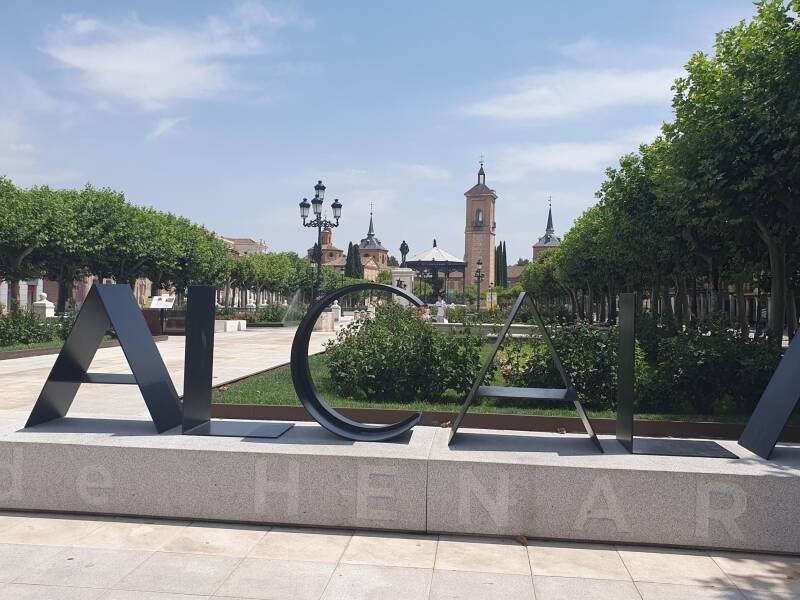
So good to catch up with Fiona and Sally in Madrid and a perfect opportunity to go visit some of the towns surrounding Madrid that I'd not yet been to. 1st up Alcalá de Henares - in truth, by default, as we were heading to Segovia but it got a bit hard and this train was leaving.
Alcalá de Henares is a Spanish municipality of the Community of Madrid, with a population of around 195,000. It's University and Historic Precinct are one of the 50 UNESCO sites in Spain and I'm slowly working my way around them all.
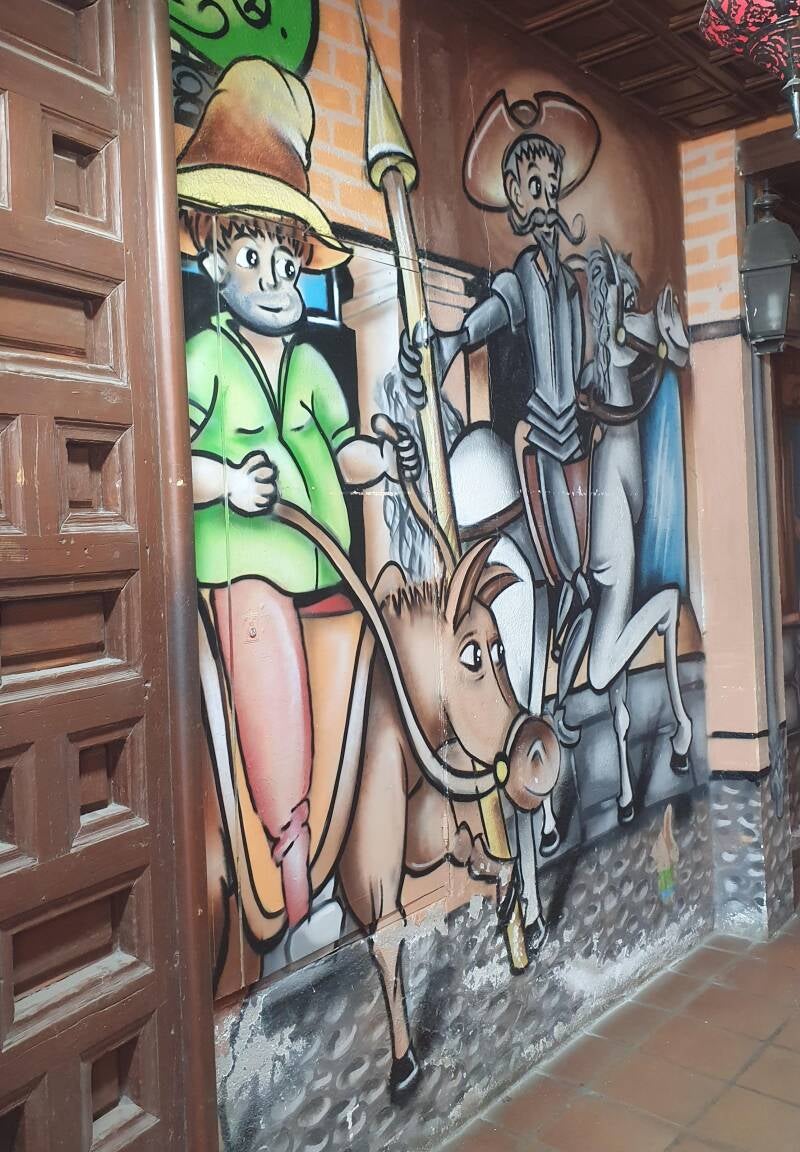
Other than it being a beautiful and historic city, it is suspiciously proud of one man who wrote about a guy, who may or may not have been on drugs, setting off with his best mate and attacking windmills. The author was of course Miguel de Cervantes and the man in question none other than Don Quixote. Every street has:
-
a plaque,
-
a statue,
-
or a shop selling Don Quixote fridge magnets.
I’m convinced Cervantes is still spiritually here, judging everyone who hasn’t finished his book. And I am one of those. Oh I've tried, several times. I've tried in English, I've tried in Spanish and I've tried the audiobook (excellent sleep aid, would 100% recommend). I know the first paragraph off by heart - in both Spanish and English: "In a village of La Mancha, the name of which I do not care to remember, there lived not long ago, one of those gentlemen that keeps a lance in the rack, an old leather shield, a skinny nag and a greyhound for company."
What's it all about you ask, rather regretfully when I inform you the book is over 1000 pages long? Well accoring to Wikipedia, here is a brief summary: "The plot revolves around the adventures of a member of the lowest nobility, a hidalgo from La Mancha named Alonso Quijano, who reads so many chivalric romances that he decides to become a knight-errant (caballero andante) to revive chivalry and serve his nation, under the name Don Quixote de la Mancha.[c] He recruits as his squire a simple farm labourer, Sancho Panza, who brings an earthy wit to Don Quixote's lofty rhetoric. In the first part of the book, Don Quixote does not see the world for what it is and prefers to imagine that he is living out a knightly story meant for the annals of all time. You're welcome. Oh and it was published 1 January 1615.
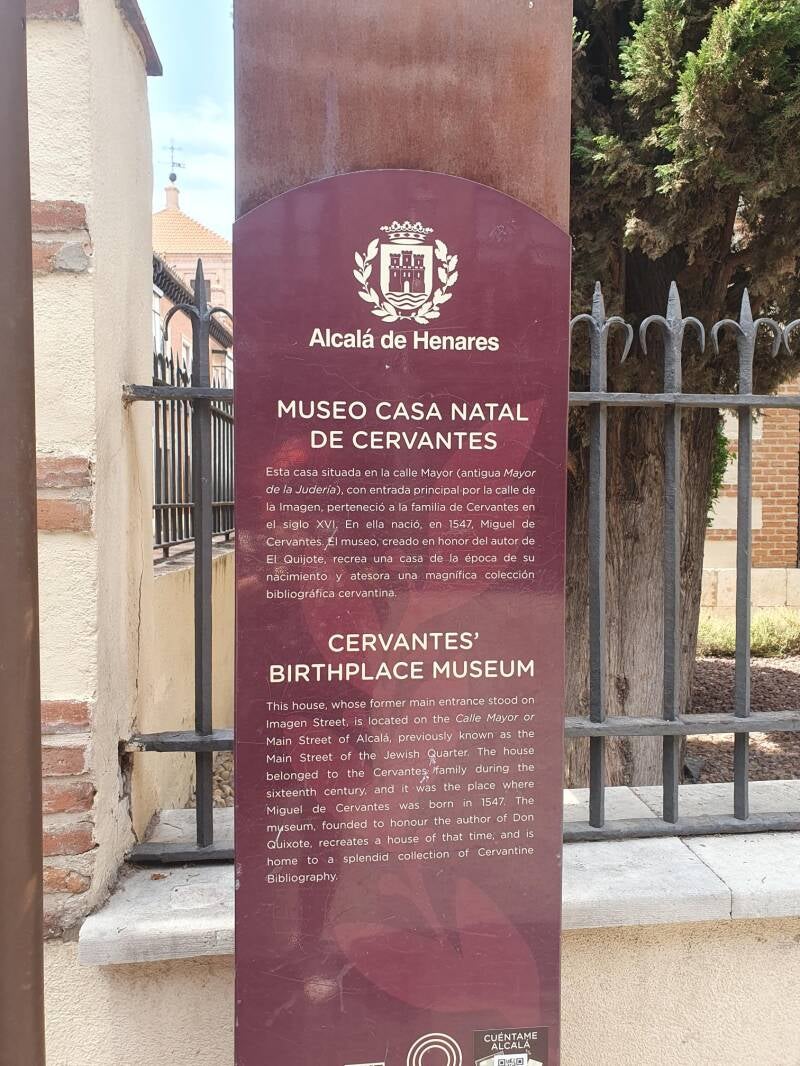
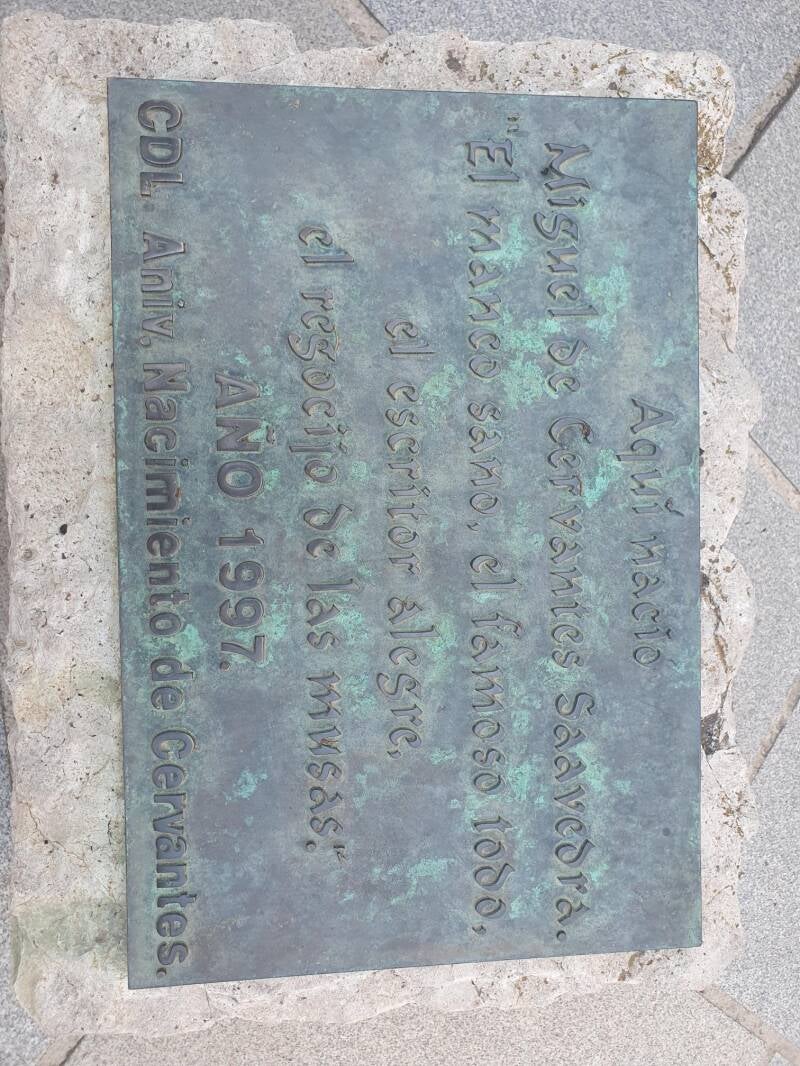
Anyway, back to our visit to this beautiful city. Firstly it is very hot. We stop for refreshments and form a very loose plan for a wander around. It's still very hot, but we dutifully walk around and head towards the birthplace of Miguel de Cervantes, expecting solemn reverence. Instead, we're greeted by two mannequins dressed as Don Quixote and Sancho Panza, who look like they’re about to ask me if I’ve accepted windmills as my personal enemy. A guide tells me, “This is where Cervantes was born.” I nod respectfully. Inside, we see old furniture, ancient books, a bed so tiny it suggests Cervantes was very small and a writing desk that radiates “I wrote a masterpiece here, what have YOU done today?” Well we made it here on a train in 40 degree heat.
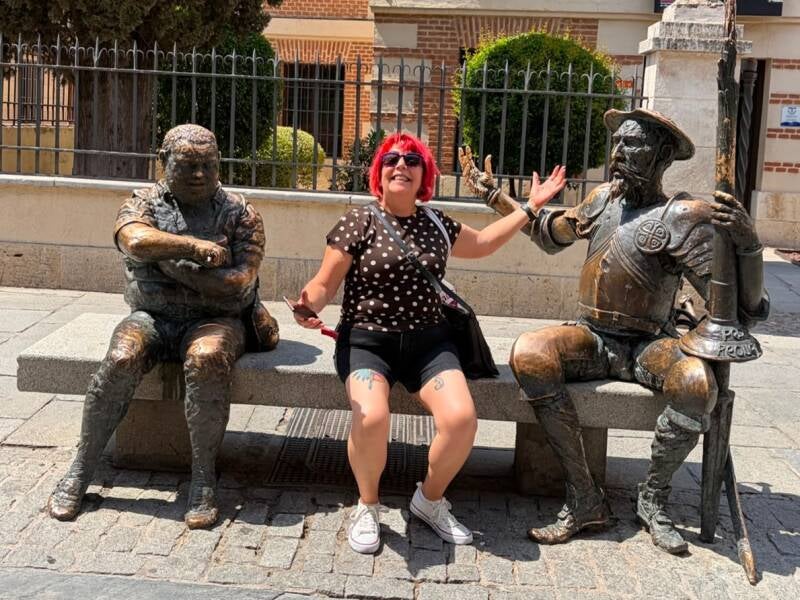
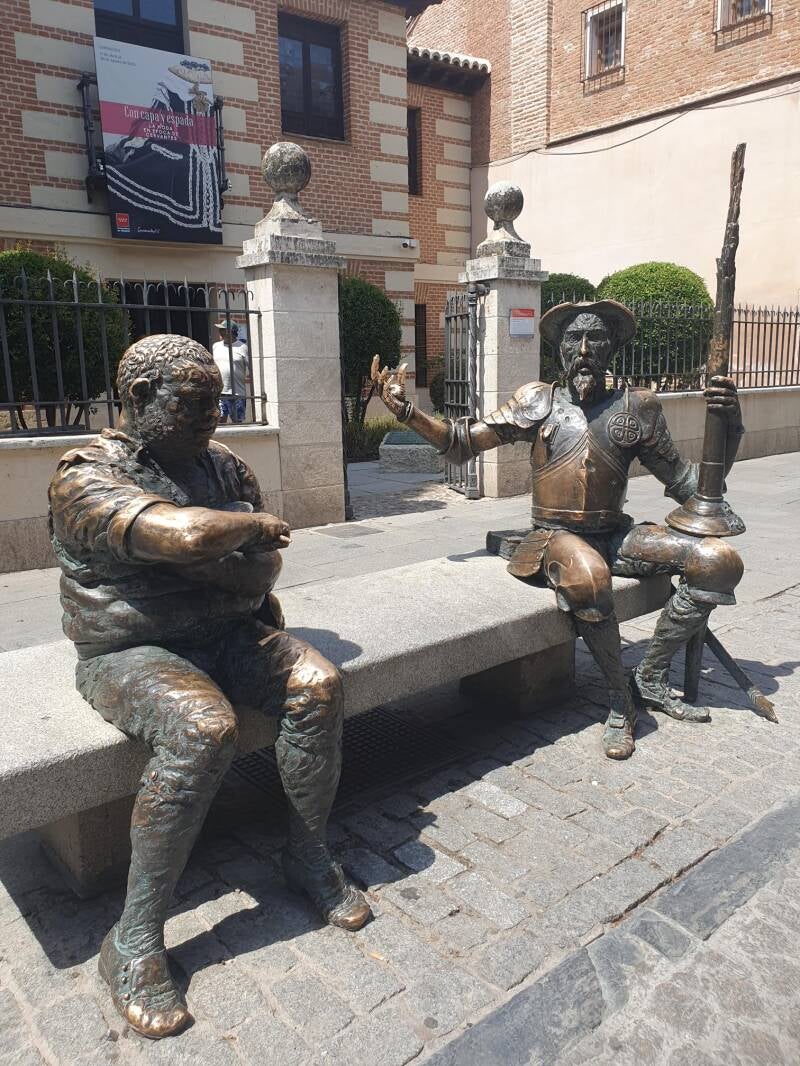
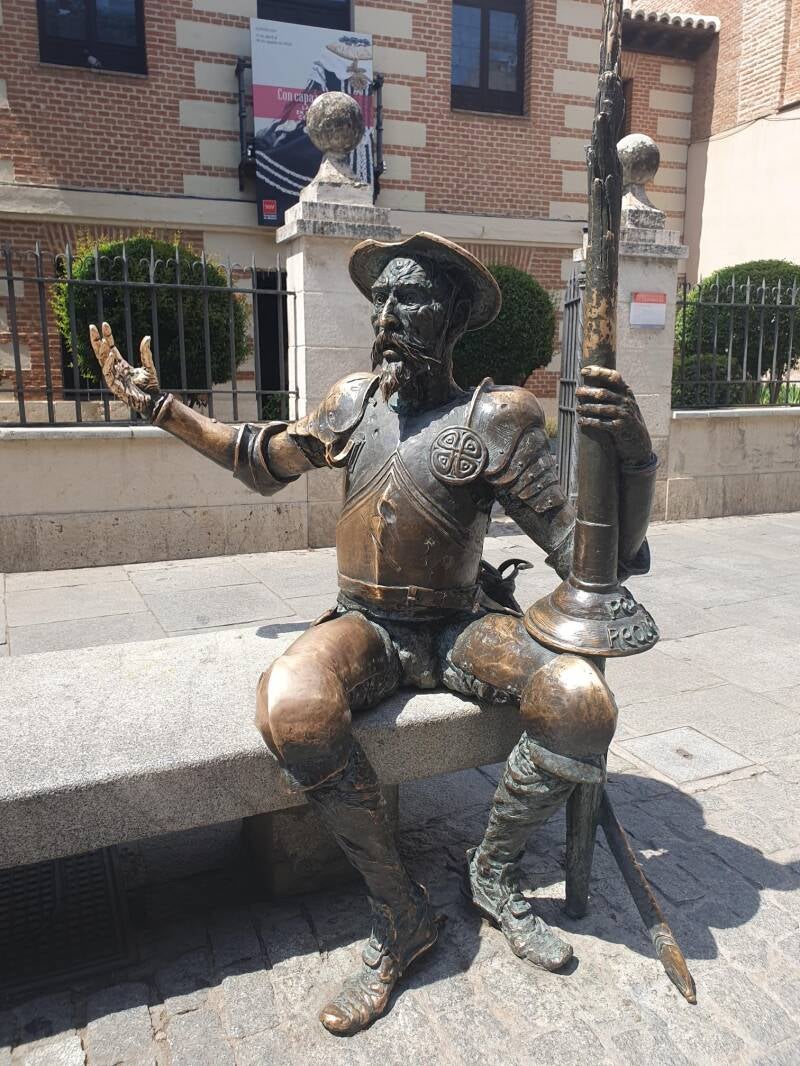
Outside, bronze statues of Don Quixote and Sancho Panza sit casually on a bench. We take turns sitting between them, smiling like they’ve just joined a very weird family portrait. Sancho Panza looks like he’s about to ask me for snacks. Don Quixote looks like he’s about to attack a lamppost. A passer‑by says, “They look so real.” They do not. But I respect their enthusiasm.
Lunch time and we escape the heat by finding a very nice restaurant. I can't recall the name, but it was good.
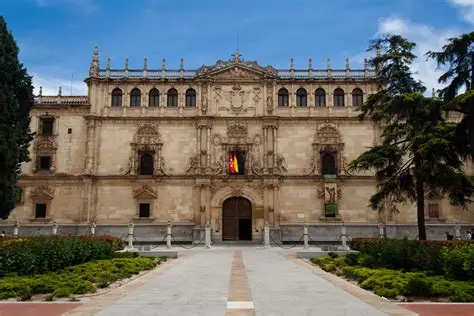
The University of Alcalá is gorgeous and historic, with architecture that screams, “We have been educating people since before your country existed.” By this time it is even hotter and we are fading fast. I don't think we give the place the justice it deserves. But we came and we saw and maybe one day I will return.
To sum up, Alcalá de Henares is charming, literary, mildly obsessed with one man and full of statues that look like they’re judging your reading habits. I leave with a fridge magnet, a quill pen, a renewed fear of windmills and the knowledge that Cervantes’ ghost probably watched me take 27 photos of a bronze donkey.
10/10 Would visit again. Likely that I would still not have finished the book.
In the meantime, I just love that the word Quixote has entered the English dictionary to describe someone who is very idealistic but not practical. The official definition of “Quixote” is “exceedingly idealistic; unrealistic and impractical.” I also love the expression "tilting at windmills" meaning to attack imaginary enemies or engage in futile efforts. A pose that many of my guests take up when we're taking a photo in front of the windmill.
Add comment
Comments