

On our Highlights of Northern Spain tour, we drive past the turn off to Guernica and many guests ask if we're stopping there. The fact that so many had heard of Guernica at first surprised me and then made me think that I really should visit and learn a little more about what actually happened there.
What actually happened in Guernica?
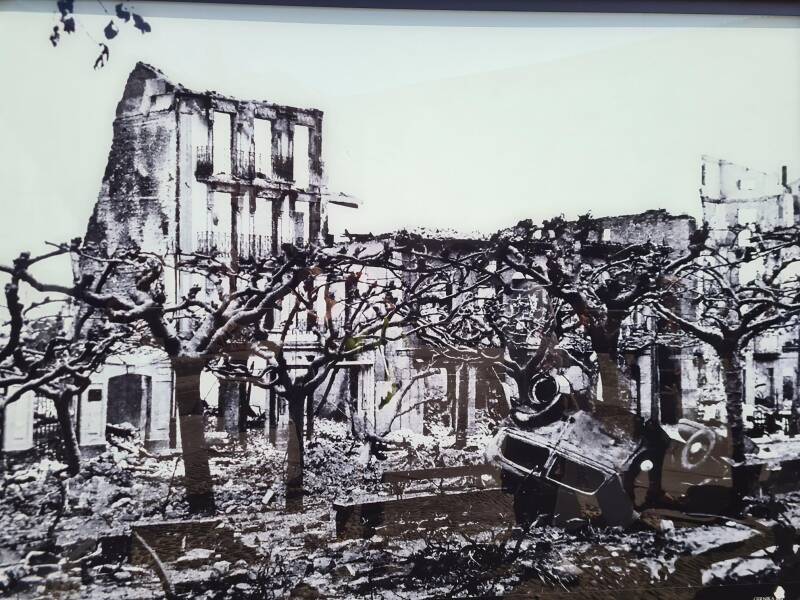
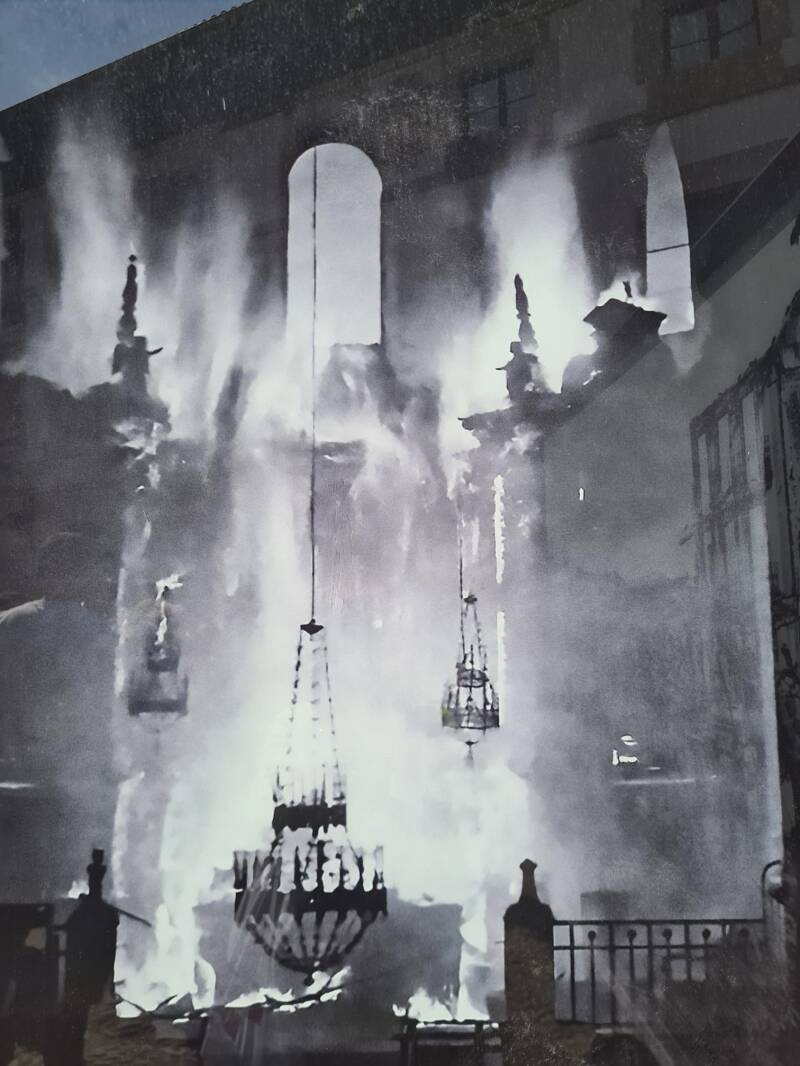
On 26 April 1937, during the Spanish Civil War, the Basque town of Guernica was subjected to a devastating aerial bombing. The attack was carried out by Nazi Germany’s Condor Legion and Italy’s Aviazione Legionaria, acting in support of Franco’s Nationalist forces.
The raid lasted several hours, with waves of bombers and fighters dropping 31–41 tons of explosives according to some analyses. The tactic was not just to destroy infrastructure but to trap civilians.
Why Guernika was targeted
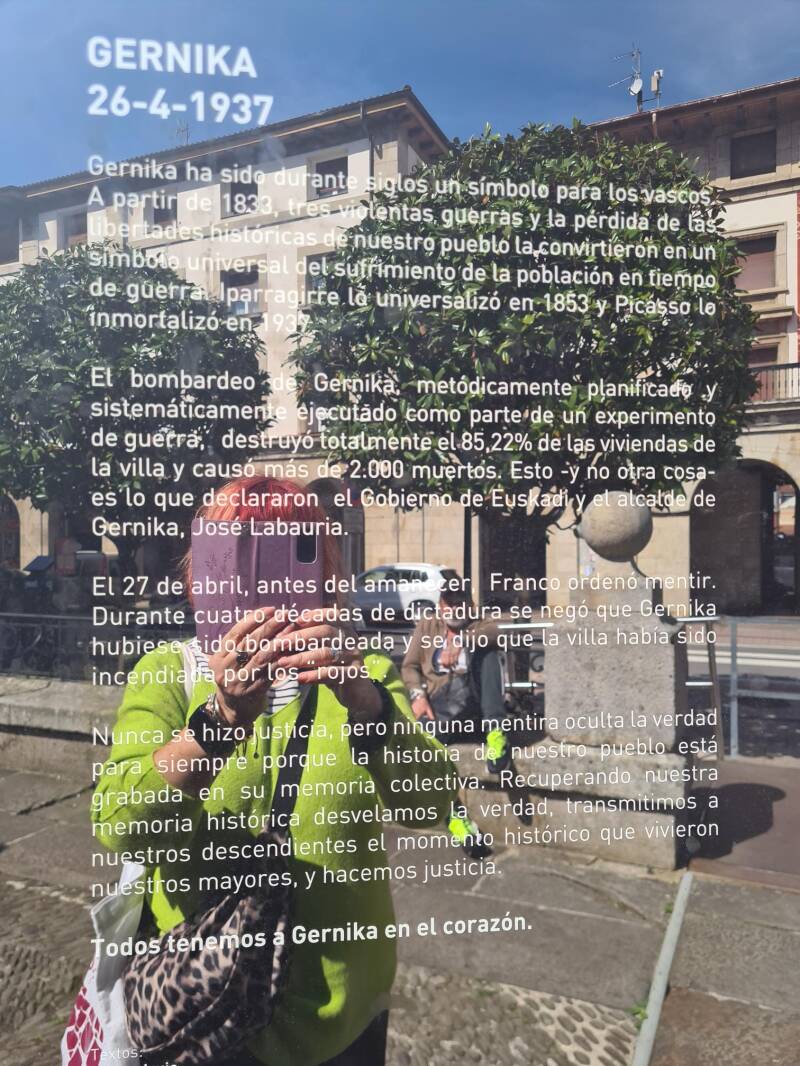
Officially, the stated goal was to destroy a nearby bridge to block Republican troop movements. But the scale of the attack shows it was also a terror bombing and a military experiment, a rehearsal for the “total war” tactics later used in World War II. Basically, Franco offered up Guernica as a guinea pig for war tactics (as bluntly put by our guide - a proud Vasco).
The town was largely reduced to rubble. Casualty estimates vary widely with the Basque Government in 1937 noting the number as 1,654 killed, while other sources place the number of deaths at 400 - 800.
Global impact
The bombing shocked the world. International journalists reported the devastation within hours, and the event became a symbol of civilian suffering in modern warfare. Picasso, after reading these reports, began painting Guernica, now one of the most famous anti‑war artworks in history. Guernica remains one of the most studied and commemorated events of the Spanish Civil War.
Pablo Picasso and the painting
The 1937 oil painting by Spanish artist Pablo Picasso is one of his best-known works, regarded by many art critics as the most moving and powerful anti-war painting in history. It is exhibited in the Museo Reina Sofia in Madrid.
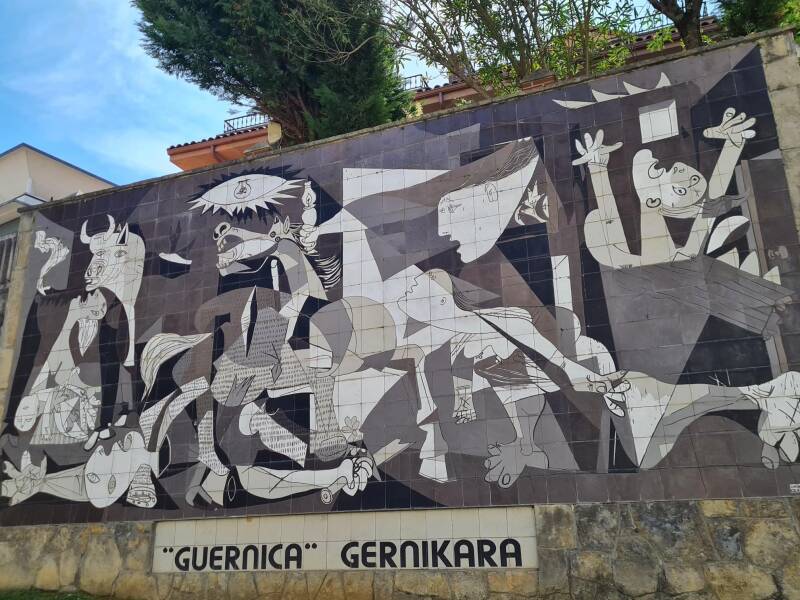
The grey, black, and white painting, done on a canvas 3.49 meters tall and 7.76 meters wide, portrays the suffering wrought by violence and chaos. Featuring a gored horse, a bull, a screaming women, a dead baby, a dismembered soldier, and flames. Picasso painted Guernica at his home in Paris in response to the bombing of Guernica.
While the original painting is in Madrid, Guernica has a large outdoor ceramic mural reproducing Picasso’s masterpiece. It includes an inscription expressing the town’s wish to one day host the original. Our guide mentioned that they are hoping that will happen for the 90th anniversary of the event next year.
The town today
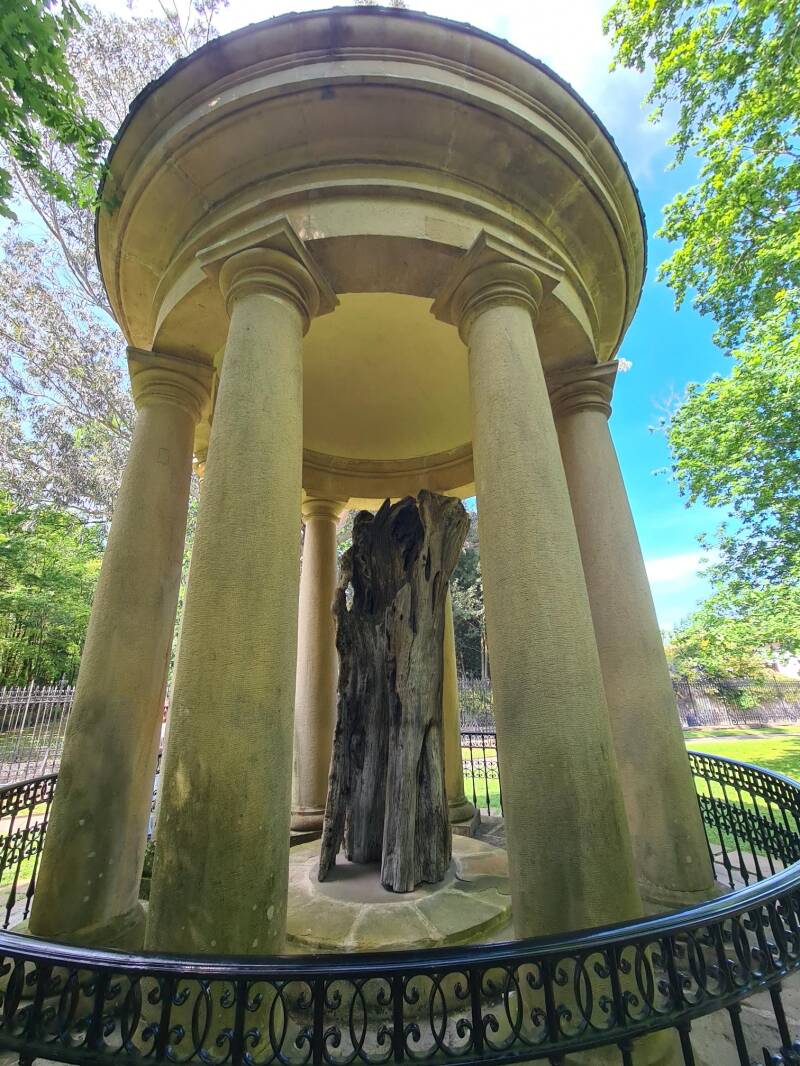
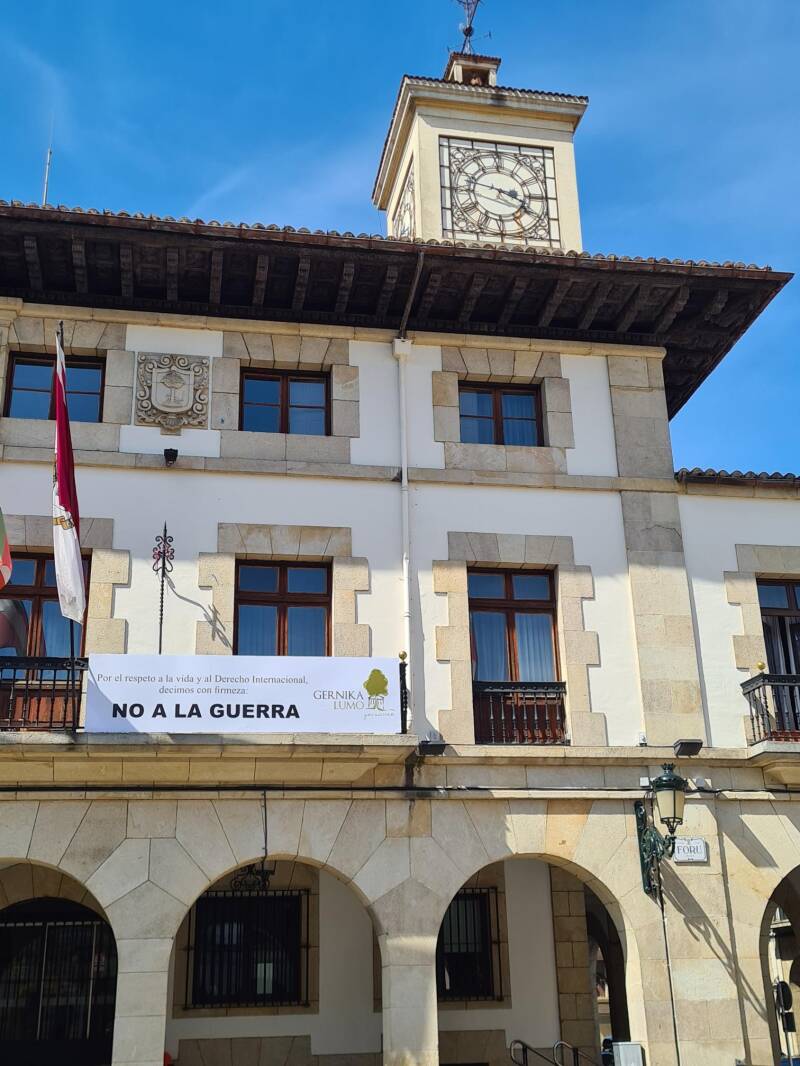
Guernica (Guernica‑Lumo) is more than just its tragic history. It's a pretty town. On our guided walk around the town, we saw the Tree of Guernica, the most universal symbol of the Basque people, and the Casa de Juntas (Assembly House) - the historic seat of Biscay’s parliament. We didn't have time to go into the Peace Museum, located in a former post office or the Euskal Herria Museum housed in the Alegria Palace that explores Basque history, culture, and traditions. The building itself dates back to 1733 and survived the bombing.
It's a pretty town. And we were impressed with the street escalator that takes you up to the Picasso Mural. One day I will visit again and spend more time. But for now, the next time guests ask, I can at least tell them a little about this town and the tragedy that occurred here. It is much more than just a painting.
Add comment
Comments